Best Casinos Not on GamStop for UK Players
 Available in GB
What the scheme actually covers, what sits outside it, and what a UK player in 2026 takes on when they search beyond the UKGC ring.
By Daniel Ashworth, iGaming Regulation Analyst
GamStop is the United Kingdom’s national online multi-operator self-exclusion scheme, operated by the not-for-profit National Online Self-Exclusion Scheme Limited. It launched in 2018, became mandatory for every UK Gambling Commission licensee in 2020 and reached 562,000 registrations by the end of 2025. A “casino not on GamStop” is, by definition, an online casino that does not hold a UKGC remote licence, because integration with GamStop is a UKGC licence condition. This page covers what that means in regulatory terms, where the player’s protections shift, and where help is available.
Table of Contents
- Non-GamStop Casinos Summary and Key Metrics
- How the non-GamStop operator landscape is structured
- How GamStop works in brief
- The UKGC licensing perimeter
- Section 33 of the Gambling Act 2005 in plain English
- Why UK players started searching for offshore sites in 2025-2026
- The protection gap outside the UKGC framework
- Payment infrastructure in practice
- Enforcement and the size of the offshore market
- Remote Gaming Duty at 40 per cent from 2026
- RGD 40% RTP Impact Calculator
- What this means for a UK player in 2026
- Help and responsible-gambling resources
- Common questions answered
- About the author
Non-GamStop Casinos Summary and Key Metrics
- GamStop is a UKGC licence condition; “not on GamStop” therefore means “not UKGC-licensed”.
- The Section 33 offence under the Gambling Act 2005 falls on the operator, not on the player.
- Offshore play in 2026 sits entirely outside UK consumer protections: no IBAS adjudication, no affordability framework, no statutory slot stake limit.
- UK retail banks increasingly apply Merchant Category Code 7995 blocks on gambling card transactions, which often decide whether a payment clears.
- The Remote Gaming Duty rise to 40 per cent in 2026 affects UKGC operators directly; offshore sites are not subject to it but face heavier UK enforcement.
- If the search is driven by an active self-exclusion, the National Gambling Helpline on 0808 8020 133 and device-level blockers such as Gamban are the routes the scheme is built around.
How the non-GamStop operator landscape is structured
This site does not publish a ranked or recommended list of casino brands. The non-GamStop category is shaped by licensing jurisdiction, operating-company concentration and product specialisation; those structural patterns are the practical starting point for understanding what a UK player is actually looking at when they step outside the UKGC ring.
The category cannot be sensibly described in the form of a five-row brand comparison either. The Curacao framework moved to a single regulator and a new OGL licence format in 2024, and several of the most-cited UK-facing brands have changed operating company at least once in the year that followed. Some moved between corporate vehicles in early 2026; at least one rebranded entirely. A brand-by-brand comparison published today would misrepresent the present-day legal counterparty for parts of the category. Instead, the structure below describes the categories, not the names.
By licensing jurisdiction
By operating-company pattern
Several consumer-facing brands routinely share one operating company and one underlying licence number. Three brands cited across UK-facing review coverage in early 2026 sit under a single Curacao OGL licence; another well-known brand rebranded in 2026 to a new domain while keeping the same operator and licence. The pattern matters: a player who believes they are using five independent counterparties may, in practice, be facing one. When a single operator restructures, every brand under it changes regulatory status at the same moment.
By product specialisation
Crypto-first sites accept Bitcoin, Ethereum, USDT, USDC and a long tail of altcoins, typically with lighter or no KYC under a per-transaction threshold. Hybrid fiat-and-crypto brands accept UK debit and selected e-wallets alongside crypto and tend to trigger KYC at withdrawal. Casino-and-sportsbook combinations dominate the larger end of the category; pure casino-only brands are a minority.
By advertised features and risk markers
The features that draw the search traffic — no affordability check, no statutory stake cap, multi-deposit welcome packages of two hundred to six hundred per cent, no GamStop integration — are the same features that describe the missing UK protections. The trade-off is symmetric. A useful screening list for any specific brand a reader is considering: confirmed licence number on the current site footer, the legal name of the operating company, the public registration status of that company in its home jurisdiction, the documented complaint history, the published withdrawal limits and timelines, and whether the brand is part of a group sharing one licence with sister brands.
Where this site does discuss specific operators in cluster pages, it does so only after current verification against an external source and with the risk markers stated alongside the descriptive facts. The decision not to publish a named comparison on this page reflects the project rule that an operator listed for comparison must hold a current, verifiable licence to a stable corporate vehicle and accept UK players at the moment of publication. For a fuller breakdown of how to read the rest of this picture, see how to read the non-GamStop operator landscape and the licence-by-licence comparison in Curacao, Anjouan and MGA licences compared.
How GamStop works in brief
GamStop is operated by National Online Self-Exclusion Scheme Limited, a not-for-profit body funded by the gambling industry under arrangements approved by the UK Gambling Commission. Registration is free for UK residents and runs through the official site at gamstop.co.uk. Identity is verified through personal details cross-checked against credit-file data.
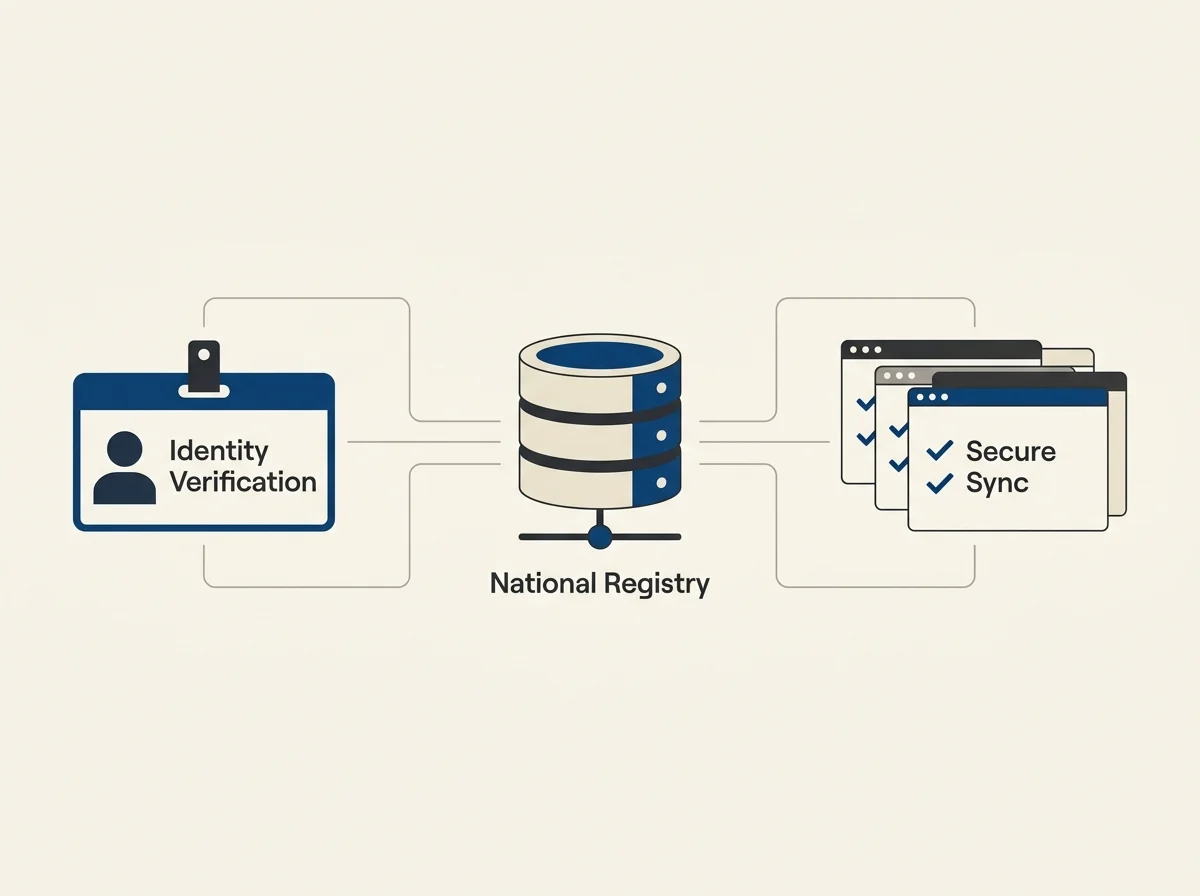
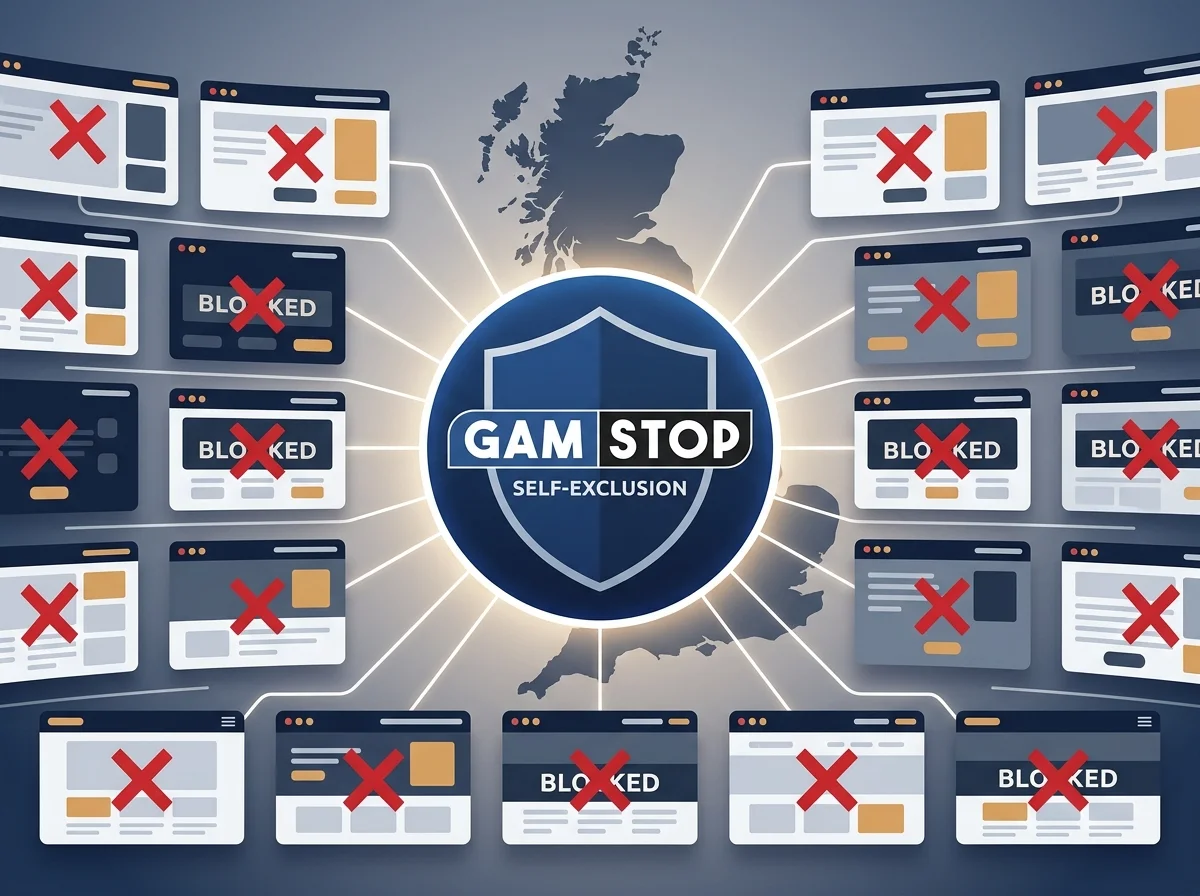
Once registered, every UKGC remote licensee is required to block the player from creating new accounts or accessing existing ones for the chosen duration. The scheme operates a centralised database that operator systems must sync against at least every twenty-four hours.
The choice on duration is six months, one year, five years, or “five years with auto-renewal”. The auto-renewal option, introduced in late 2024, functions as a de facto lifetime block unless the user actively opts out. 2025 was the first month in which more than half of those registering for the five-year option also opted into auto-renewal.
The exclusion cannot be reversed or shortened before its end date. After expiry, removal requires a phone call to 0800 138 6518, an identity check and a mandatory twenty-four-hour cooling-off period before the block is lifted. For the full mechanics of registration and removal, see how GamStop works and the GamStop expiry process.
At a glance: scheme size in early 2026
562,000 total registrations by the end of 2025, around one per cent of the adult population. 58,675 new registrations in the second half of 2025 alone, averaging 319 per day. The sixteen to twenty-four age group accounted for 29 per cent of those new sign-ups, with year-on-year growth among under-twenty-fives of forty to forty-four per cent.
The UKGC licensing perimeter
The UK Gambling Commission licenses operators that provide remote gambling facilities used in Great Britain. The trigger for the licence requirement is geographical use of the facilities, not where the servers or the company sit. An operator with no equipment in the UK can still need a UKGC licence if its facilities are used here and the operator knows or should know that they are.
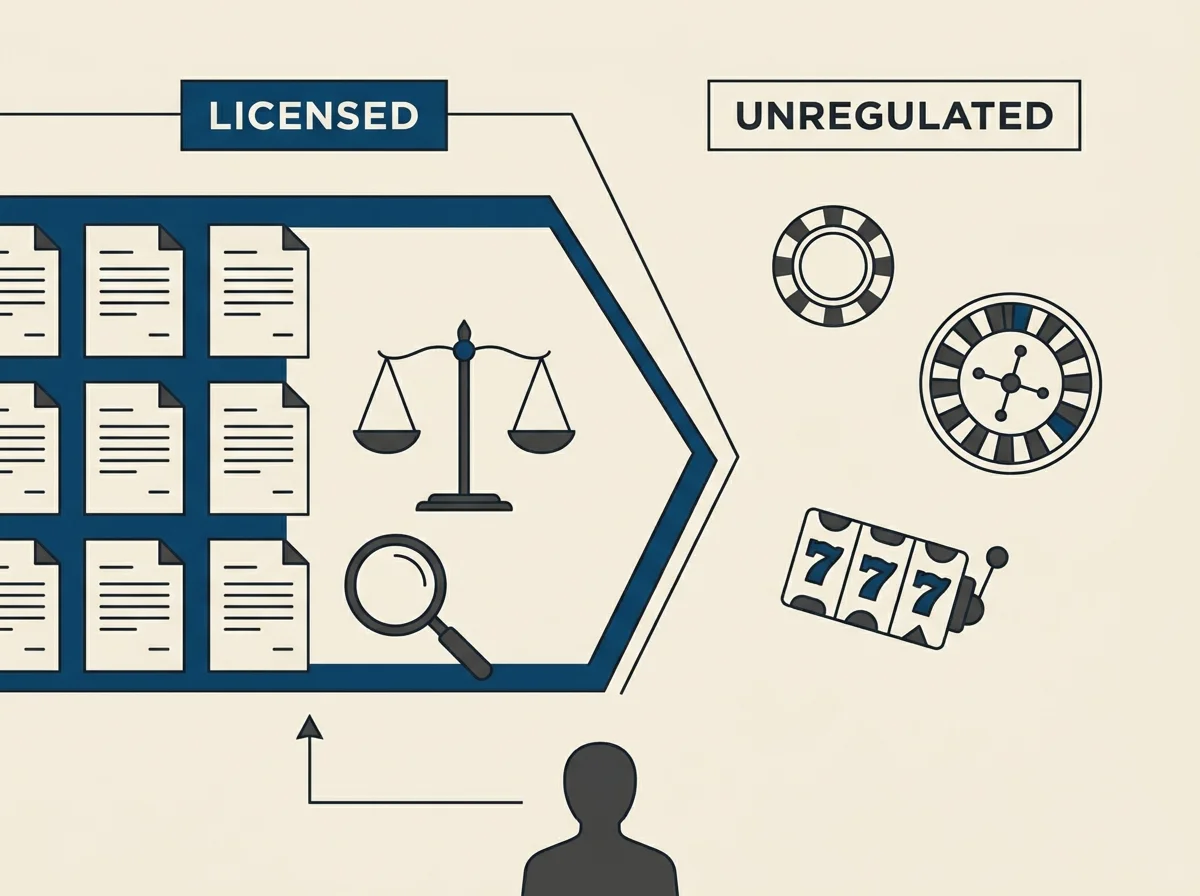
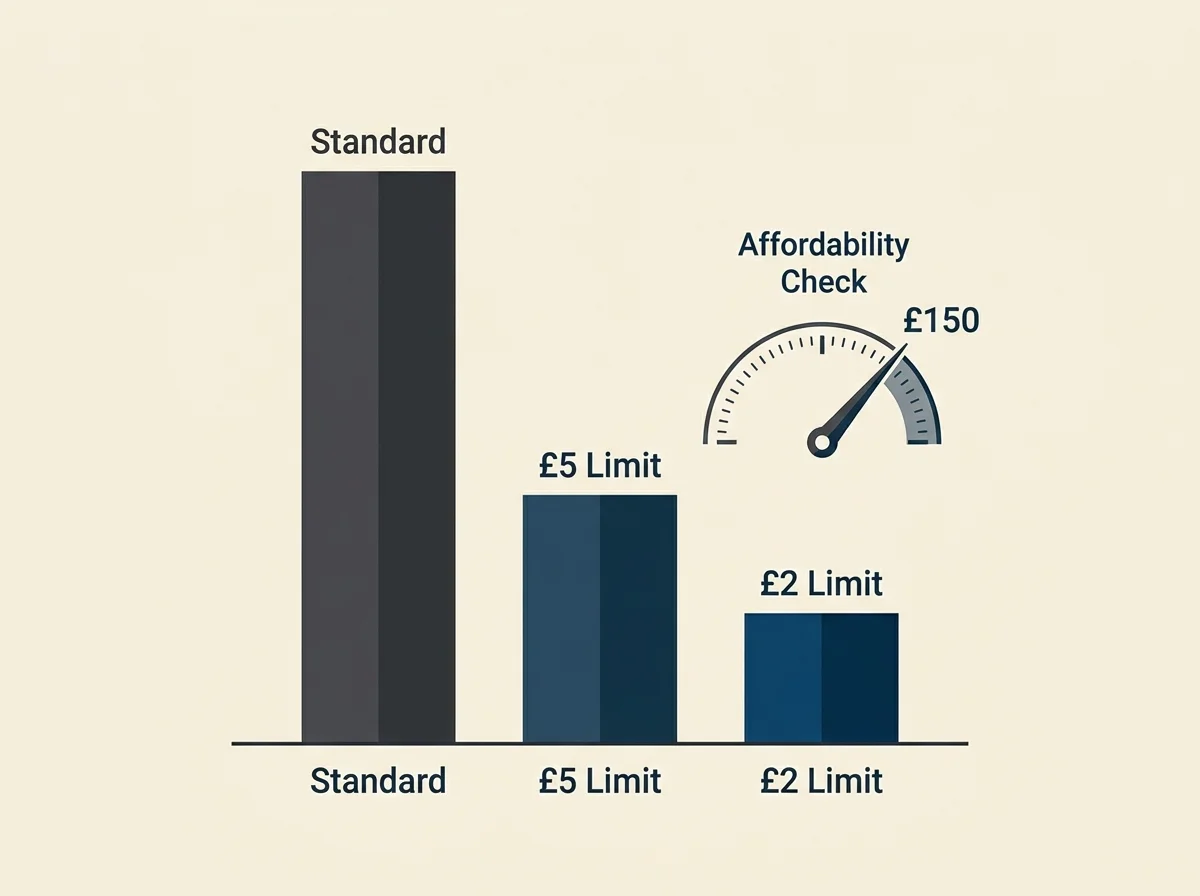
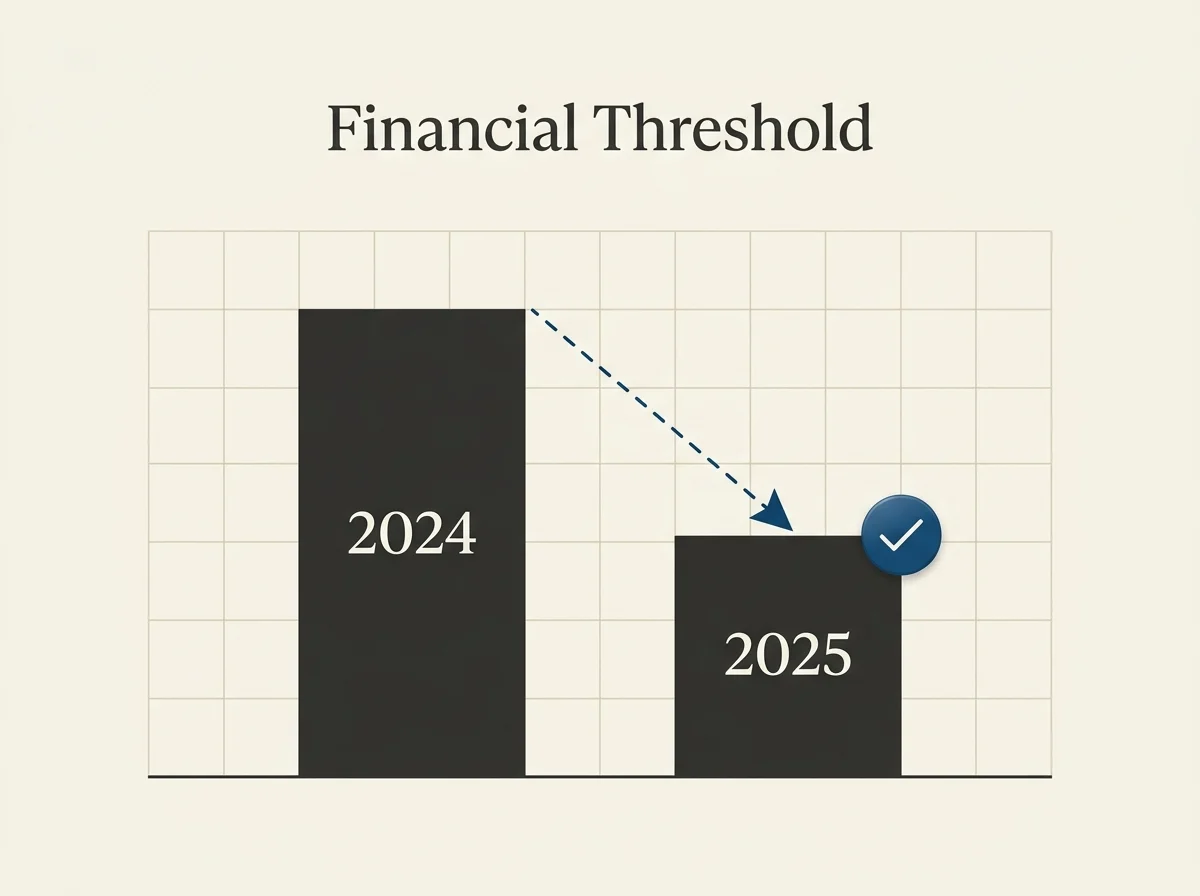
A UKGC operating licence carries a set of conditions that an offshore licensee does not carry. The licensee must integrate with GamStop. It must apply Financial Vulnerability Checks at the £150 net-deposit threshold over a rolling thirty-day window, which dropped from £500 in 2025. It must observe the statutory slot stake cap of £5 per spin for adults over twenty-four, and £2 per spin for eighteen to twenty-four-year-olds, that came into force in 2025. It must cap session timers and reality-check pop-ups. It must not accept credit cards under LCCP licence condition 6.1.2, in force since 2020.
None of these conditions attaches to a casino without a UKGC licence. The point is not that offshore sites do worse on each rule; it is that none of the rules applies to them in the first place. That is what “outside the perimeter” structurally means.
Section 33 of the Gambling Act 2005 in plain English
Section 33 of the Gambling Act 2005 is the statute that makes operating an unlicensed gambling business a criminal offence in Great Britain. The maximum penalty is fifty-one weeks of imprisonment in England and Wales, six months in Scotland, and a fine to level 5 on the standard scale. The Gambling (Licensing and Advertising) Act 2014 extended that licensing requirement to any operator whose facilities are used in Great Britain, regardless of where the equipment sits.

The crucial structural detail is asymmetry. The offence sits with the operator. There is no parallel offence in UK gambling law for a resident who registers an account at an offshore casino and deposits funds. The UK Gambling Commission’s enforcement record bears this out: published cease-and-desist notices, search-engine delisting referrals and geo-blocking actions all target operators that are deemed to be targeting the UK market. The case law and the published enforcement work do not pursue the individual customer.
“Not pursued” and “protected” are different things. A self-excluded player who deposits at an offshore casino has not committed any offence under UK law, but they have stepped outside every protection that the UK consumer-protection framework offers. The legal asymmetry is what makes this category exist; it is not a reassurance about the outcome of using it. For a longer treatment of the legal asymmetry and the targeting question, see Section 33 explained for the player.
The Section 33 takeaway
The offence is the operator’s, not the player’s. Enforcement targets operators that target the UK. The player’s exposure is in the loss of protection, not in criminal liability.
Why UK players started searching for offshore sites in 2025-2026
The search volume for “casino not on GamStop” climbed through 2025 and held into 2026. The drivers, drawn from UK Gambling Commission research and the operator side of the market, cluster into a handful of recurring motives.
Self-exclusion regret is the most cited single motive. A player who registered for five years, often the default option offered first, cannot reverse the decision and looks for ways to gamble during the active window. The Gambling Commission’s own research links bypass of self-exclusion with continued gambling harm rather than with successful re-engagement on the player’s own terms.
The statutory slot stake limits, in force since 2025 for both the over-twenty-fives and the eighteen to twenty-four group, capped per-spin stakes at £5 and £2 respectively. Offshore sites have no equivalent cap, and that is the explicit point of difference advertised across the category. The Financial Vulnerability Check dropped its trigger threshold from £500 to £150 net deposit over thirty days in 2025, which both lowered the friction-onset point on UKGC sites and lengthened the queue of players who described the checks as intrusive.
The credit-card ban under LCCP 6.1.2, in force since 2020, also remains a structural difference. Offshore operators can technically accept UK-issued credit cards; whether the cards work depends on the issuing bank rather than on the casino. Bonus design is a quieter driver. Welcome packages on UKGC sites are constrained by the social-responsibility code; offshore packages of two hundred to six hundred per cent on multi-deposit structures are the public-facing contrast point.
Crypto acceptance closes the list. UKGC operators effectively cannot accept cryptocurrency as a deposit method under the current source-of-funds and AML expectations. Crypto-first offshore casinos accept Bitcoin, Ethereum, USDT, USDC, XRP, TRX and a long tail of smaller tokens, with deposits typically instant and withdrawals measured in minutes.
The protection gap outside the UKGC framework
The framework a UK player gives up when they register at an offshore casino is not abstract. It is a set of specific tools that the UKGC operator must run and the offshore one does not. Some of the missing items are quietly missed; others surface only in a dispute.
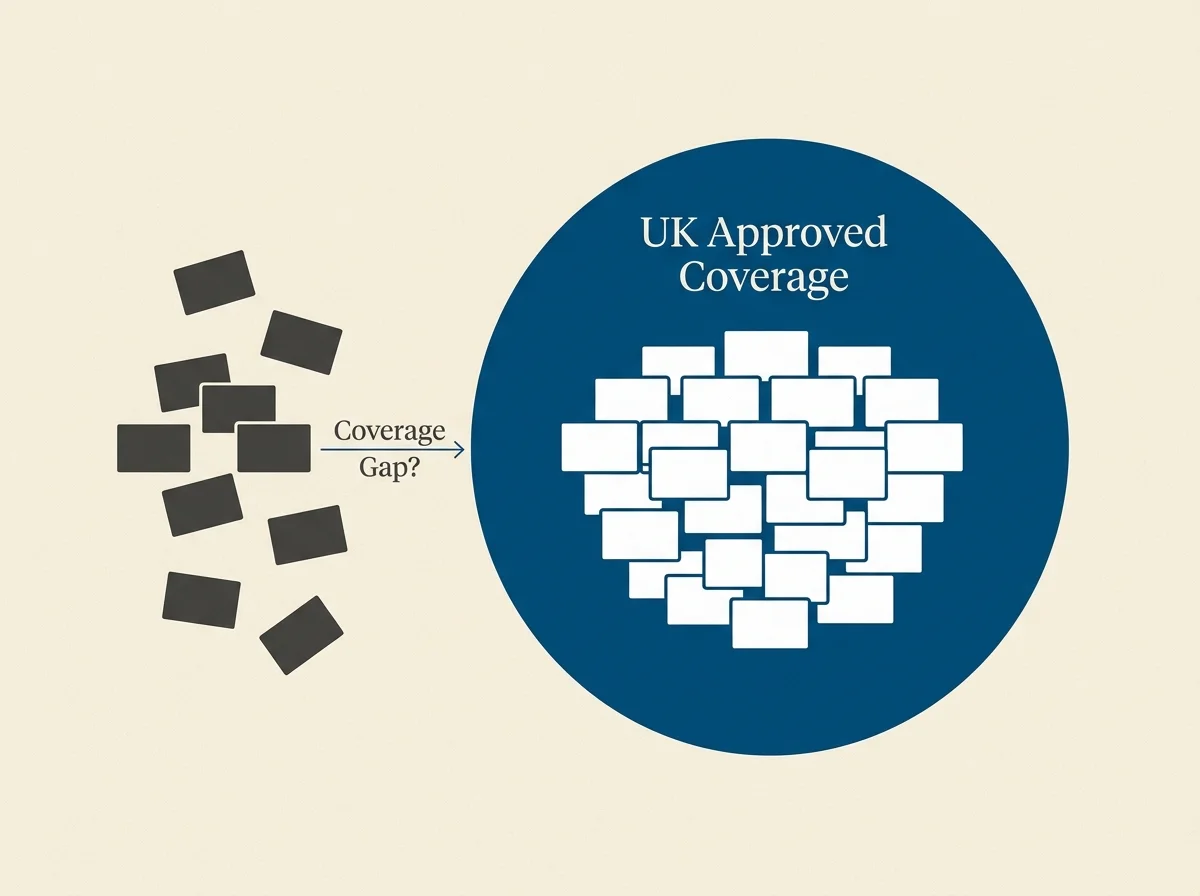
The Independent Betting Adjudication Service was founded in 1998 and has handled over one hundred thousand cases. Its awards are binding on the operator up to a £10,000 cap. IBAS only adjudicates against operators registered with the scheme, and the registered population is, in effect, the UKGC licensee population. An offshore-only operator is not bound by IBAS and the player has no IBAS pathway. The alternatives are the licensing jurisdiction’s own complaint process, which in Curacao is the regulator’s adjudication route, or third-party mediators such as the AskGamblers Casino Complaint Service and the Casino Guru complaints team. None of these has statutory enforcement power in the UK; the leverage is reputational rather than legal.
The Financial Vulnerability Check at £150 net deposit, the Financial Risk Assessment pilot launched in 2024 for heavier losses, the statutory slot stake limits, the 2.5-second minimum slot game cycle, the reality-check pop-ups and the session-timer requirements all sit on the UKGC side. So does the mandatory direct link to UK responsible-gambling resources: GamStop, GamCare, BeGambleAware and the National Gambling Helpline are required signposting on a UKGC operator’s site.
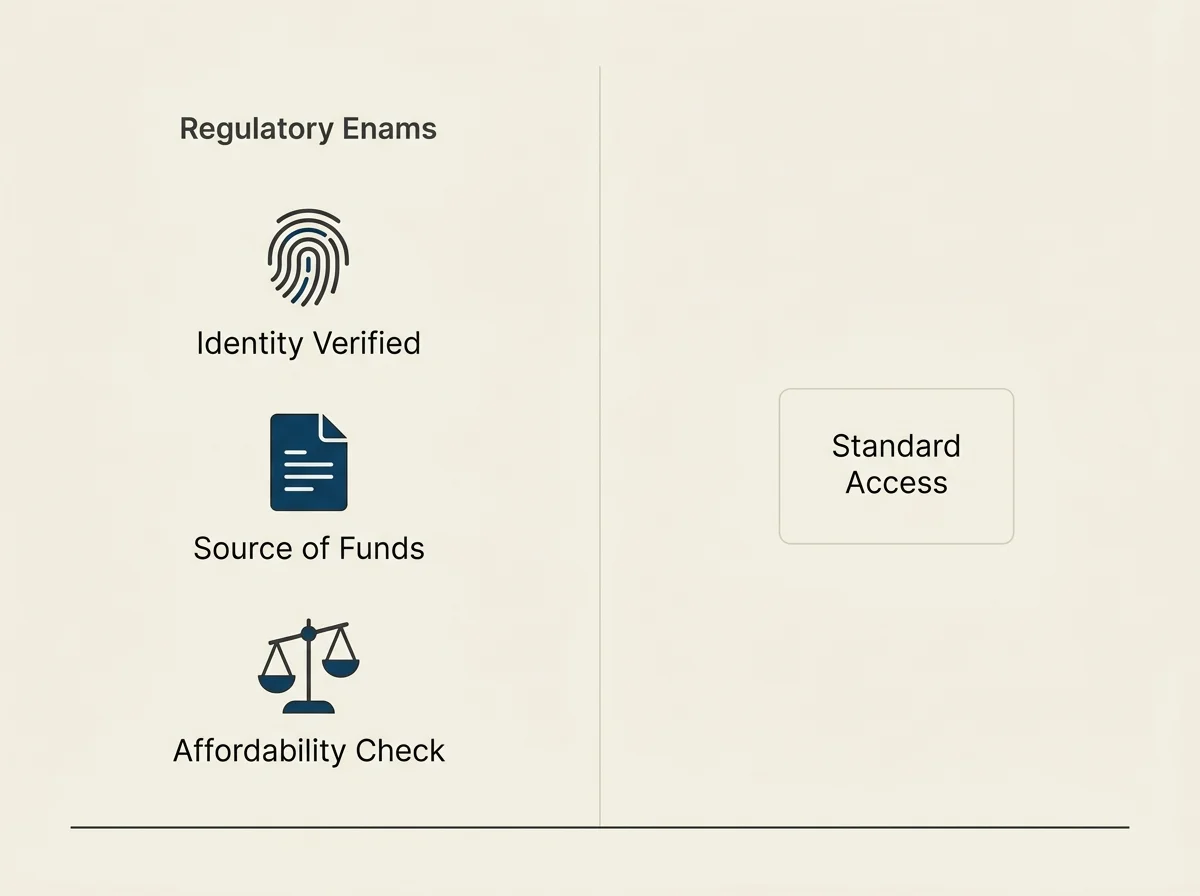
The KYC pattern in this category is worth describing precisely. Offshore operators often advertise light or no KYC at sign-up, especially crypto-first sites running under a per-transaction threshold. The friction tends to arrive at withdrawal, particularly after a large win, in the form of unannounced source-of-funds requests citing anti-fraud or bonus-abuse clauses. Documented complaint patterns across the category include withdrawal delays following large wins, account closure with balance forfeiture under broad terms-and-conditions clauses, and protracted resolution timelines once a complaint is raised. For the full risk and dispute picture, see the structural protection gap outside the UKGC perimeter.
What changes outside the UKGC perimeter
What is removed
- Statutory £5 / £2 slot stake cap
- £150 Financial Vulnerability Check threshold
- Credit-card ban under LCCP 6.1.2
- Mandatory affordability framework
What is also removed
- IBAS adjudication route and binding award cap
- GamStop self-exclusion coverage
- Mandatory KYC discipline at withdrawal
- Required responsible-gambling signposting
Payment infrastructure in practice
The payment side of the non-GamStop category is the place where most disputes start, and it is where the published rules and the lived experience diverge most often. Three routes dominate: cards, e-wallets and cryptocurrency.
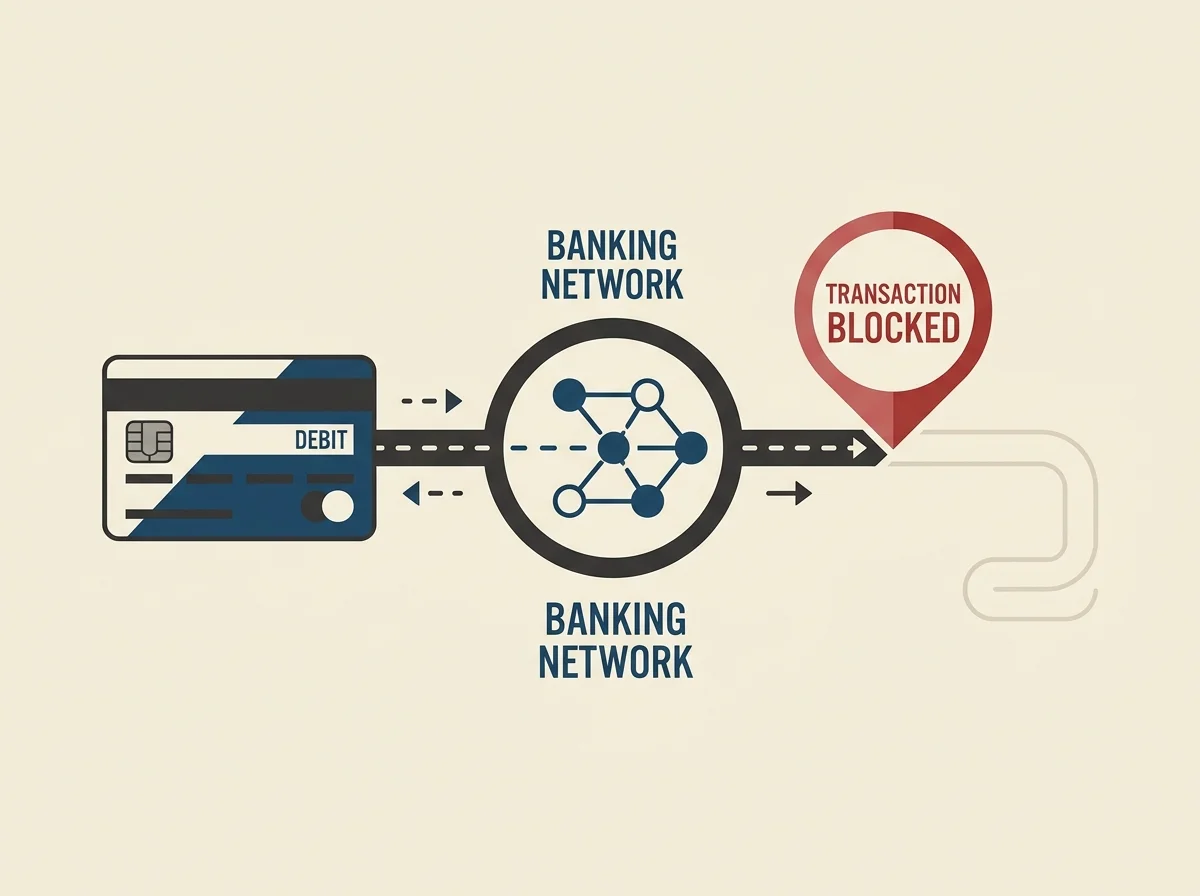
UK-issued cards rest on the issuing bank’s policy, not on the casino’s. The LCCP credit-card ban applies to UKGC operators only. An offshore operator can technically accept a UK Visa or Mastercard credit card, but Merchant Category Code 7995 is the standard gambling marker on a card transaction, and HSBC, Barclays, Lloyds, NatWest, first direct, Monzo, Revolut and Halifax all offer customer-facing gambling-transaction blocks. Some banks default the block to on for new accounts; others make it opt-in. UK debit cards on Visa Debit and Mastercard Debit are the most widely accepted at offshore sites, and they are also the ones most often declined at the bank.
E-wallets sit in the middle. Skrill, Neteller and ecoPayz are routinely supported. Revolut appears across the category, with the caveat that Revolut’s own app offers a gambling block users can switch on and off. PayPal is rare in this category because PayPal restricts merchant onboarding to licensed jurisdictions. Apple Pay and Google Pay appear at some operators but route through the underlying card networks and therefore inherit the same bank-level block treatment.
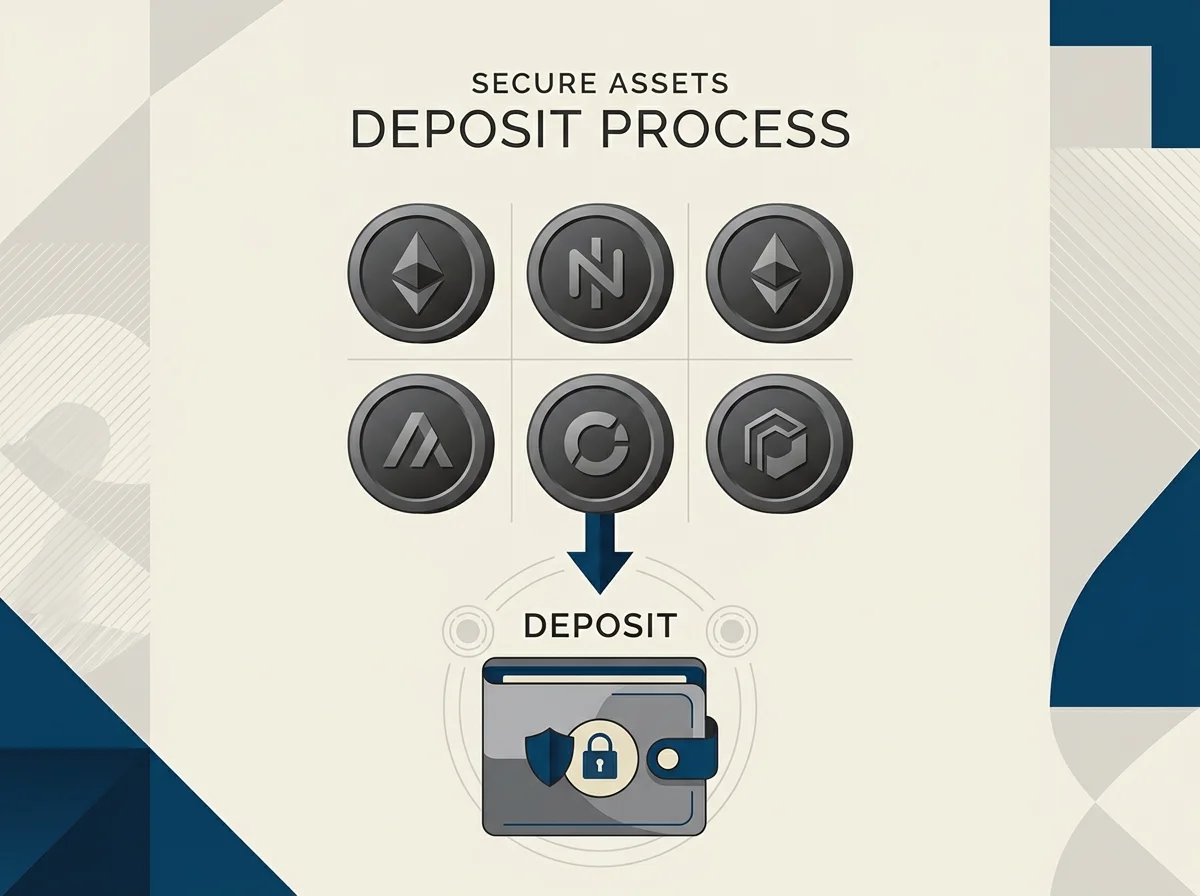
Cryptocurrency is the structural alternative the rest of the category increasingly builds around. Most non-GamStop crypto casinos accept Bitcoin, Ethereum, Litecoin, USDT, USDC, XRP, TRX, SOL and dozens of smaller tokens. Deposits are typically instant; withdrawals run in minutes to under an hour, network-dependent. The bank-level block does not apply; FX overhead does not apply; the account holding is pseudonymous, although the on-chain history is not. Volatility risk on a non-stablecoin deposit is the player’s, not the casino’s. For a deeper breakdown, see non-GamStop payment methods in practice and how MCC 7995 bank blocks work.
Enforcement and the size of the offshore market
The UK Gambling Commission published its 2026 to 2027 business plan with a significantly ramped-up illegal-markets agenda. The headline numbers from the period leading up to 2026: 741 cease-and-desist notices issued, more than one thousand referrals of website URLs to search engines for delisting, and around 1,100 websites geo-blocked or removed. The 2025 Autumn Budget allocated an additional £26 million in Treasury funding for illegal-markets enforcement over three years.
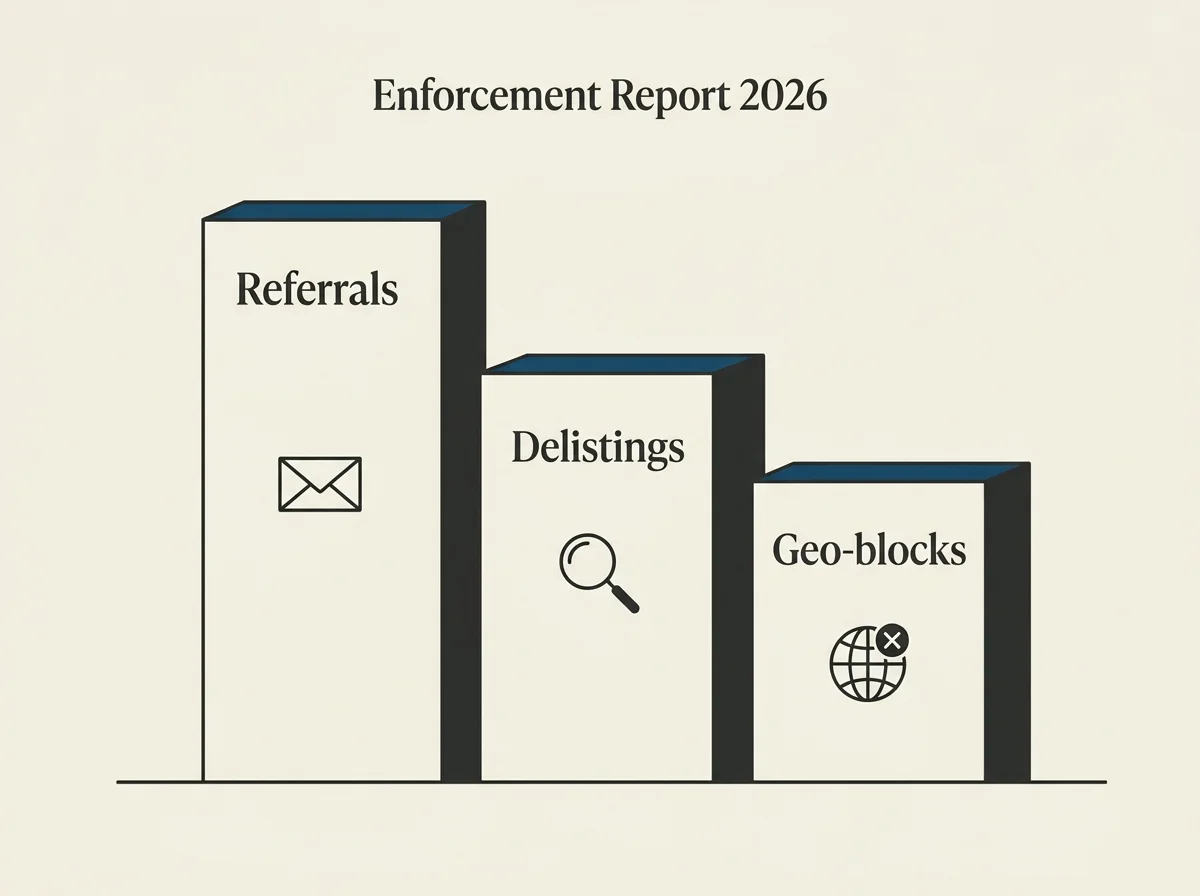
The Commission has been recruiting a new Head of Illegal Markets through the early part of 2026. Stake.com surrendered its UK licence in 2025 after an Advertising Standards Authority investigation and a £3.3 million UKGC financial penalty against TGP Europe Ltd, which had held the relevant licence. As of 2026 it geo-blocks UK IP addresses. The pattern across the category is movement: operators consolidate, rebrand and shuffle licensing entities; the Commission’s enforcement keeps cycling through new domains.
On the size of the offshore market, the most-cited figures come from the Betting and Gaming Council and from H2 Gambling Capital research. The 2026 numbers put UK offshore betting stakes at around £16.6 billion in 2025, against approximately £5 billion in 2019, with legal-market share dropping from 97 per cent to 92 per cent over the same period. The UK Gambling Commission has explicitly declined to endorse those industry-commissioned numbers and is itself working on independent research into the size and drivers of the unlicensed market. The Yield Sec research in 2025 identified more than five hundred illegal sports-betting and casino operators actively targeting the UK and over 1,100 affiliates promoting them.
Remote Gaming Duty at 40 per cent from 2026
RGD 40% RTP Impact Calculator
The 2026 duty rise from 21% to 40% compresses UKGC operators’ yield by nearly twenty points – and industry submissions point to weaker RTP as the likely response. Enter your play to see what a UKGC RTP cut costs against an offshore standard-RTP baseline.
How this works: RTP (return to player) is the share a slot pays back over the long run; the rest is the house edge (100% − RTP). Your volume is stake × spins, and the expected loss on each side is volume × (100% − RTP). The extra cost of the lower RTP is the difference: volume × (offshore RTP − UKGC RTP). The 2026 context is specific. From 2026, UK Remote Gaming Duty rose to 40% of gross gaming yield, up from 21% – a near-twenty-point compression on UKGC operators’ margins. Players don’t pay tax on winnings; the duty sits on the operator. But industry submissions to the Treasury point to weaker RTP percentages, lower bonus values and tighter wagering as the likely operator responses to absorb it – all legal, all visible to the regular player. Offshore sites aren’t subject to UK RGD, so they can run standard-RTP versions of the same games. With the default (£2 × 1,000 spins = £2,000 volume) a 92% versus 96% gap is £80 of extra expected loss – on the RTP alone. This is the number the offshore side of the market leans on hardest. The honest other half: an offshore site sits outside every UK protection too – no IBAS adjudication, no affordability framework, no GamStop coverage, KYC that tends to arrive only at withdrawal after a large win. The RTP maths is real; so is the protection gap. And this is a long-run expectation, not a single-session prediction – variance dominates the short run, but the RTP cost is structural. Not financial advice. 18+ – if your search is driven by an active self-exclusion, the National Gambling Helpline (0808 8020 133) and Gamban are the routes built for that. BeGambleAware and GamCare are available.
From 2026, Remote Gaming Duty in the United Kingdom rose to 40 per cent of gross gaming yield, announced by the Chancellor in the Autumn Budget 2025. The previous rate had been 21 per cent since 2014. The change applies to accounting periods starting on or after that point. Remote betting on the General Betting Duty side stays at the present rate, with a separate planned shift in 2027.
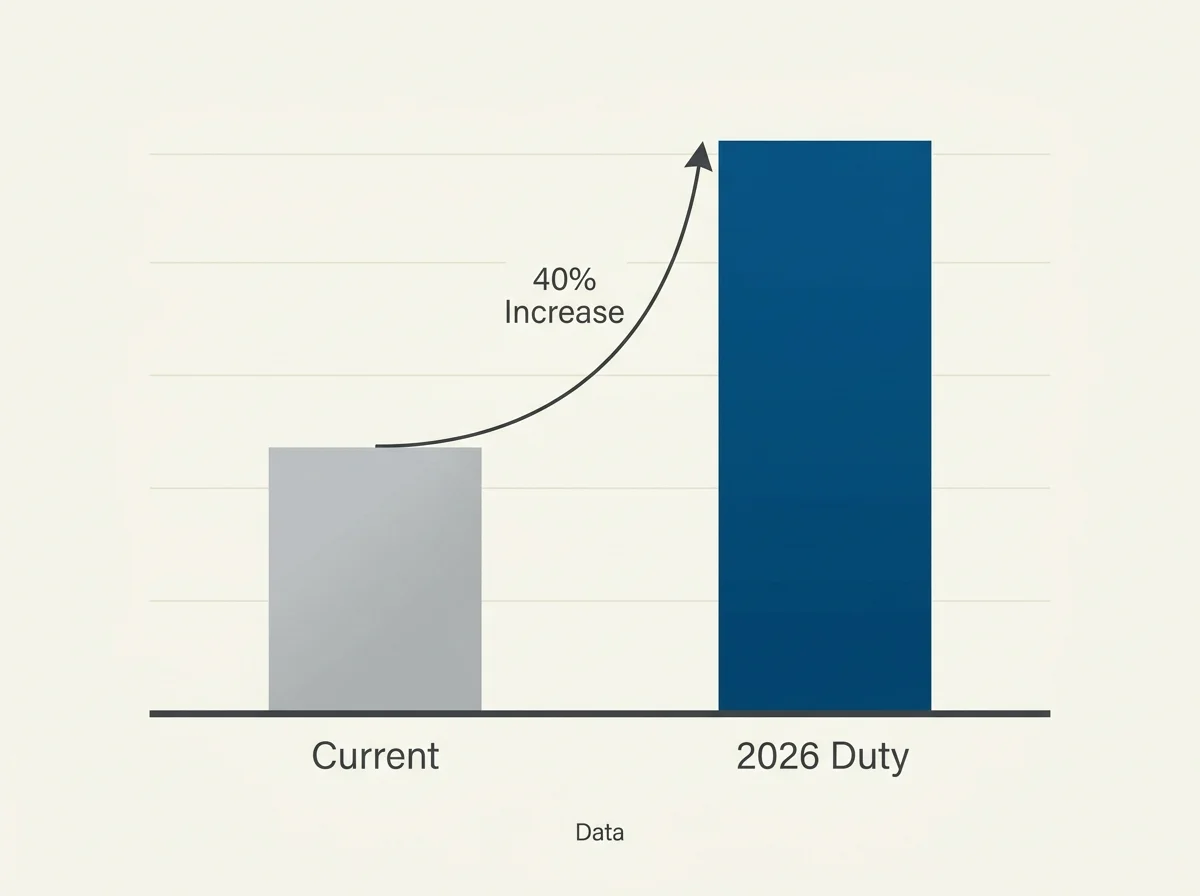
Players in the UK do not pay tax on gambling winnings. The duty sits on the operator. The mechanical question raised by the doubling is what UKGC operators do to absorb a near-twenty-point yield compression. Industry submissions to the Treasury and Gambling Commission consultations point to weaker return-to-player percentages, lower bonus values and tighter wagering requirements as the most likely operator responses. None of those is illegal; all of them are visible to the regular player.
Offshore operators are not subject to UK Remote Gaming Duty. That is a structural fact, not a regulatory recommendation. It is also the part of the 2026 picture that the operator side of the category leans on most heavily in its marketing. The player’s net position, after accounting for the loss of UK protections, is the same question the rest of this page is built around.
2026 in three numbers
- 40% — new Remote Gaming Duty rate for UKGC licensees, up from 21 per cent
- £26m — additional UK Treasury funding for illegal-markets enforcement, three years
- 1,100+ — offshore-targeting websites geo-blocked or removed in the period to 2026
What this means for a UK player in 2026
The decision to use a casino not on GamStop in 2026 is, in practical terms, a decision to step outside a defined protection framework rather than a decision to enter a different framework. Section 33 keeps the criminal liability with the operator. The UK player does not commit an offence by registering at an offshore site, and that fact does not change. Every other protection the UK framework offers does change, and most of them disappear.
The cleanest test in the category is whether the search is motivated by the absence of a feature, or by the presence of a constraint that the search is meant to remove. Stake limits, affordability checks and credit-card restrictions are constraints by design; an active GamStop self-exclusion is, in particular, a constraint the player chose and that the scheme is built not to undo. The data on bypass and continued harm, drawn from the UK Gambling Commission’s own research, is the part of the picture the rest of the page does not soften.
For a fuller walk through the parts of the picture, see the GamStop self-exclusion scheme, legitimate alternatives during an active exclusion, the operator side of the picture, and the cluster pages on the post-2024 Curacao framework, card, e-wallet and crypto routes for UK players and non-GamStop risks documented.
Help and responsible-gambling resources
If the search that brought you to this page is connected to an active GamStop self-exclusion, the scheme was not designed to be reversed during its term, and the routes below are the ones built to be used in that window.
- National Gambling Helpline: 0808 8020 133. Free, 24/7, run by GamCare. Live chat and WhatsApp also available.
- GamCare: gamcare.org.uk. Counselling, treatment and self-help tools.
- BeGambleAware: begambleaware.org. Live chat and treatment-funding charity.
- GAMSTOP: gamstop.co.uk. The scheme itself; registration and post-expiry removal.
- Gamban: Device-level blocker that covers offshore sites GamStop cannot reach. Free through the TalkBanStop campaign for those in hardship.
- NHS National Gambling Treatment Service: nhs.uk. Specialist clinics, expanding to fifteen-plus locations.
- Samaritans: 116 123. Free, 24/7, for any form of emotional distress.
Looking for a way around an active self-exclusion is itself a signal worth treating as such. The Gambling Commission’s research links bypass with continued harm rather than with successful re-engagement.
Common questions answered
What does “casino not on GamStop” actually mean?
It is an online casino that does not hold a UK Gambling Commission remote licence. Integration with GamStop is a UKGC licence condition, so any operator outside the UKGC perimeter is, by definition, absent from the register.
Is it illegal for a UK player to use a casino not on GamStop?
The criminal offence in Section 33 of the Gambling Act 2005 sits with the operator that provides facilities for gambling without a UKGC licence. There is no UK offence for the individual player who chooses to register at an offshore site, but the player loses every UK consumer-protection right that depends on UKGC oversight.
Can I cancel a GamStop self-exclusion early?
No. The minimum period chosen at registration is one-way during the chosen window. After it expires, removal requires a phone call to 0800 138 6518 and a mandatory 24-hour cooling-off period. The auto-renewal option introduced in late 2024 extends the block automatically unless the user actively opts out.
Are winnings from offshore casinos taxable in the UK?
Gambling winnings for individuals are not taxed in the UK as a matter of long-standing HMRC practice. The duties sit on the operator. From 2026, Remote Gaming Duty rises to 40 per cent of gross gaming yield for UKGC-licensed operators, which does not directly affect offshore sites.
Can my UK bank block payments to a non-GamStop casino?
Most UK retail banks now apply Merchant Category Code 7995 blocks on gambling transactions, either by default or by opt-in. HSBC, Barclays, Lloyds, NatWest, first direct, Monzo, Revolut and Halifax all offer some form of gambling-transaction block. Whether a card actually clears depends on the bank, not on the casino.
If a dispute arises with a non-GamStop casino, who adjudicates it?
IBAS, the UK approved alternative dispute resolution body for gambling, only adjudicates against operators registered with it, in practice UKGC licensees. An offshore-only operator falls outside that route. The player is left with the licensing jurisdiction’s own complaint process, or with third-party mediators such as the AskGamblers Casino Complaint Service and the Casino Guru complaints team, none of which has statutory enforcement power in the UK.
What is the difference between GamStop and Gamban?
GamStop blocks the player at the operator level, across every UKGC-licensed gambling site, by requiring those operators to refuse account creation and access. Gamban is a device-level software blocker that prevents the device itself from connecting to gambling sites, including offshore ones outside GamStop’s reach. The TalkBanStop campaign recommends using the two together for that reason.
About the author
Daniel Ashworth covers UK iGaming regulation, self-exclusion frameworks and the offshore operator landscape that sits outside the Gambling Commission perimeter. With over twelve years analysing licensed and non-UK gambling markets, he writes about the practical impact of tools like GamStop, affordability checks and KYC requirements on British players. His work focuses on how licensing jurisdiction, payment infrastructure and consumer-protection regimes shape the real-world experience of using a casino outside the UK system. He holds certifications in responsible gambling practice and has contributed analysis to research on multi-operator self-exclusion schemes.